
(Bloomberg) —
Turkey’s economy clocked one of the fastest expansion rates among peers in the first quarter thanks to a surge in consumption before a lockdown to slow the coronavirus outbreak began to take hold.
Gross domestic product rose 4.5% in the first quarter from a year earlier, after gaining 6% in the previous three months. The median of 24 forecasts in a Bloomberg survey was for a 4.9% increase.
On a quarterly basis, the economy grew a seasonally and working day-adjusted 0.6%, according to data released on Friday.
Just over a year removed from a brief recession and pumped up by monetary stimulus, Turkey surpassed countries including Indonesia, Mexico and Poland, as cheap credit at home boosted domestic consumption, traditionally the biggest driver of growth.
Below are the highlights of the GDP report released by the state statistics institute in Ankara:
- First quarter growth was driven by government spending and household consumption, which rose 6.2% and 5.1%, respectively, from a year earlier.
- Exports dropped 1% on an annual basis, down from an expansion of 4.4% in the preceding three months.
Imports jumped 22.1%, following a 29.3% expansion during the previous period.
- Gross fixed capital formation, a key measure of investments by businesses, dropped 1.4%, shrinking for a seventh time on an annual basis.
Virus Disruptions
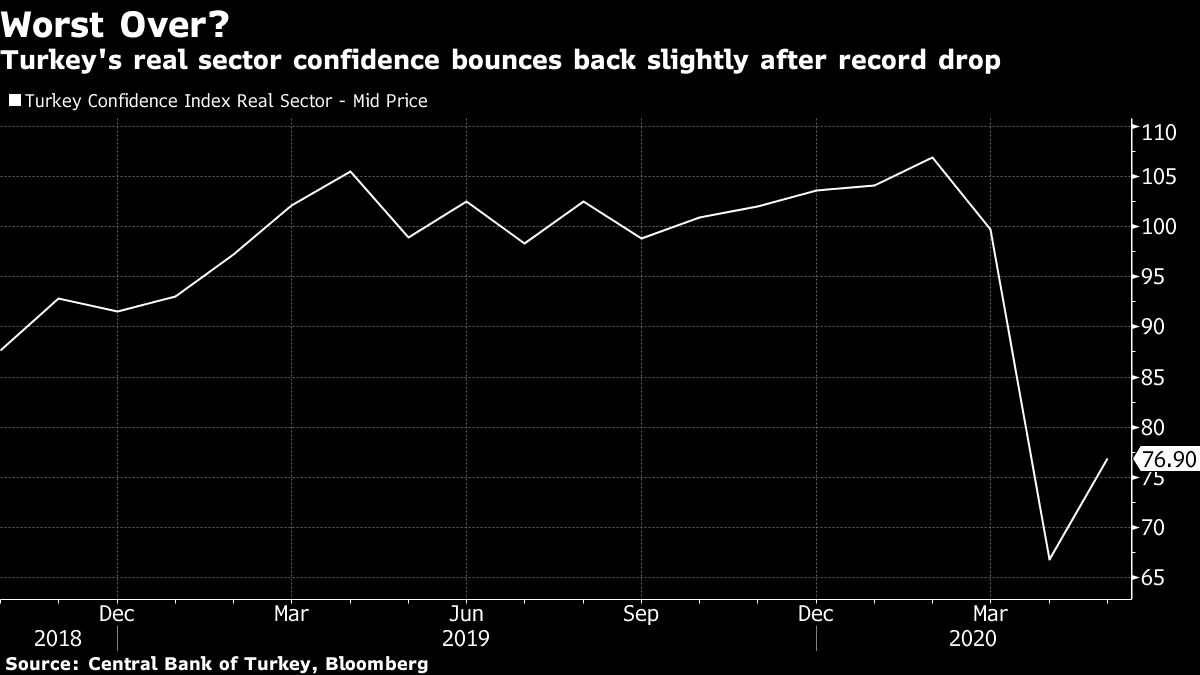
Containing the economic disruptions from the pandemic is increasingly a challenge, as business confidence crashed with the collapse of tourism and demand for Turkish exports.
While the restrictions imposed in Turkey were less severe than in Italy and Spain, the government introduced some curbs within the first few days of confirming its first coronavirus case on March 10.
Turkey’s first full-year downturn in over a decade is a risk, according to most forecasters. Still, Treasury and Finance Minister Berat Albayrak has repeatedly said he expects positive economic growth in 2020.
Turkey’s prospects for the rest of the year hinge in large part on a turnaround in tourism, a critical source of revenue and employment, as well as the speed of recovery among its top trading partners in Europe, which is facing a recession as bad as the European Central Bank’s more pessimistic forecasts.
Despite signs of stabilization in economic confidence, Turkey is likely suffering a steep contraction in the second quarter.
A gauge of manufacturing last month had its sharpest drop since the global financial crisis and exports and imports also plummeted.
The economy’s strong performance during the first quarter shows positive growth in Turkey is still possible this year, according to Haluk Burumcekci, the founder of Istanbul-based independent research firm Burumcekci Research and Consulting.
“The outlook for the rest of the year depends on how long the sudden slowdown in the economy following the Covid-19 outbreak will last,” he said. “Current signs show the economy might rebound in the third quarter following a very steep contraction during the current period, should the fight against the outbreak succeed.”
(Updates with highlights from data in bullets, adds analyst comment in final two paragraphs.)
For more articles like this, please visit us at bloomberg.com
©2020 Bloomberg L.
P.