
(Bloomberg) — Turkey extended its pause on interest rates on Thursday as the central bank waits out an upswing in inflation while the economy bounces back after the coronavirus pandemic.
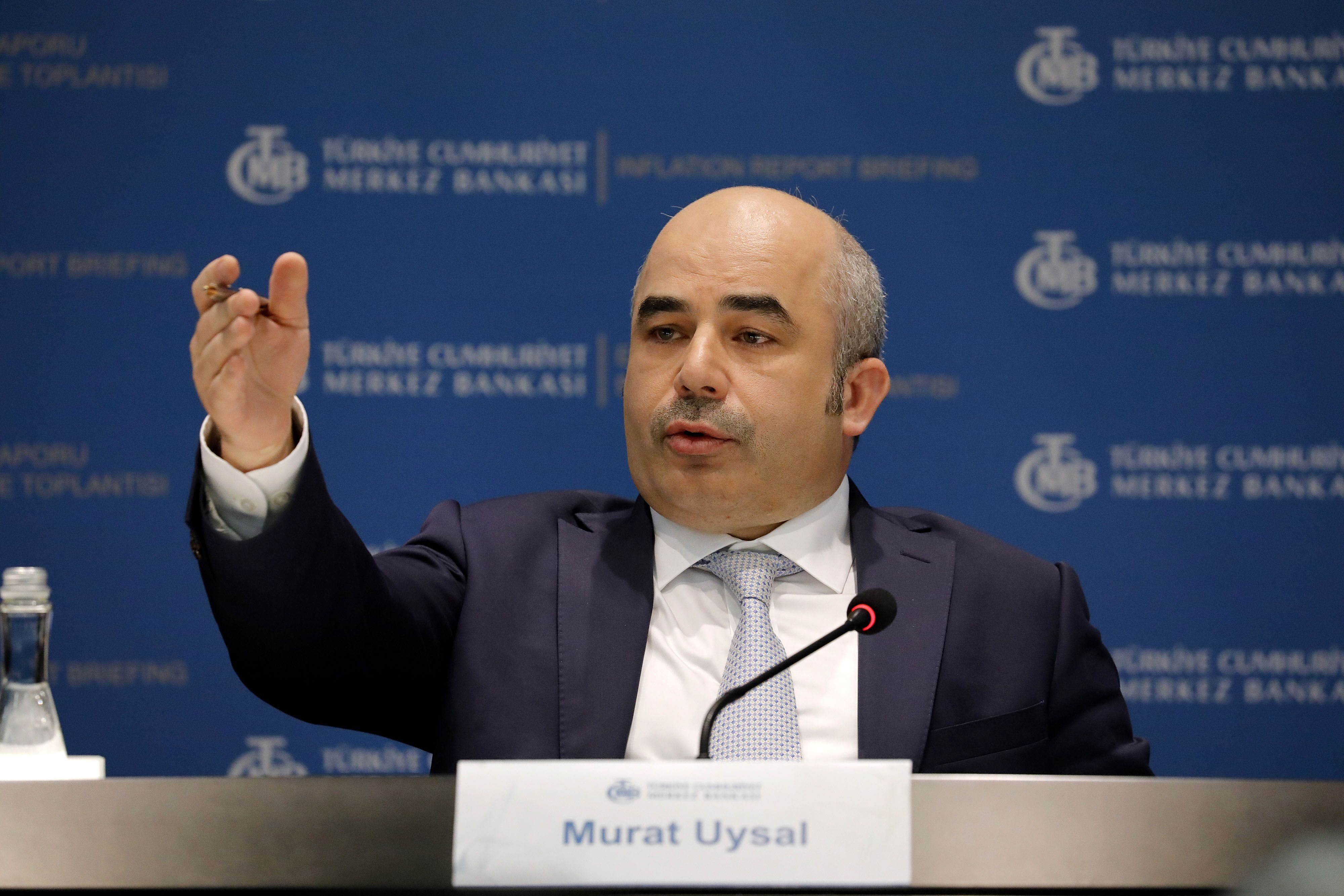
The Monetary Policy Committee left its key rate at 8.25% for a second month, in line with the first unanimous Bloomberg survey of economists since Governor Murat Uysal took over a year ago. The MPC said price growth may exceed its projections, which it’s scheduled to update next week.
Read more: No Room Left for Turkish Rate Cuts to Former Central Banker
“The Committee maintains the view that demand-driven disinflationary effects will become more prevalent in the second half of the year, but risks for the end-year projection are considered to be on the upside,” the central bank said in a statement accompanying its decision.
The possibility of resuming an easing cycle that went on without interruption until last month is increasingly in doubt after the central bank delivered 1,575 basis points of easing in nine consecutive steps.
More caution is warranted now that Turkey’s inflation-adjusted rates are among the lowest in the world while state lenders unleash credit and policy makers inject liquidity by scooping up government bonds.
Turkey’s Treasury and Finance Minister Berat Albayrak said he expects a V-shaped economic recovery as demand improves after coronavirus lockdowns.
Authorities have leaned on banks to extend loans to businesses and households to avoid cash injections that could worsen the fiscal outlook.
Home sales more than tripled from a year ago in June as buyers rushed to take advantage of the state-led cheap mortgage campaign.
While most analysts surveyed by Bloomberg in June saw lower borrowing costs at the end of the year, inflation has picked up for a second month and is now more than 5 percentage points above the central bank’s year-end forecast of 7.4%.
Read more: Inflation Going the Wrong Way for Turkey After Rate Cuts Paused
“Remarks from Turkey’s central bank imply that its end-year forecast for inflation set at 7.4% is likely to be revised higher,” said Piotr Matys, a strategist at Rabobank in London. “This in turn would indicate that the easing cycle is over, especially if the economy continues to recover.”
Still ‘Reasonable’
Policy makers say they still provide a “reasonable” real rate of return based on projected price growth.
An updated set of forecasts the central bank will unveil next Wednesday may shed more light on its next move than this week’s rate decision.
Meanwhile the lira is one of this year’s worst performers in emerging markets with a loss of about 13% against the dollar. Still, it’s stabilized since May, thanks in part to efforts by authorities to shore up the exchange rate.
But the return of current-account deficits should “eventually alter the market perception” of the lira, especially with macroeconomic risks rising as inflation accelerates, according to Sebastien Barbe, the Paris-based head of emerging-market research and strategy at Credit Agricole SA.
“The reflationary policy, with credits to the economy having accelerated to their highest level since 2015 in real terms, is also fueling external imbalances,” he said before the rate announcement. “From the central bank point of view, it may make sense to be wary about those macro-imbalances and the FX and to keep the policy rate stable once again.”
For more articles like this, please visit us at bloomberg.com
©2020 Bloomberg L.
P.