
(Bloomberg) — Libya is to export crude produced at two of its largest oilfields again after they had been halted for five months, as the North African country’s conflict-ravaged output limps toward a revival.
The National Oil Corporation lifted a so-called force majeure measure on crude exports from its Sharara field, the nation’s largest, as well as the El-Feel deposit, on Sunday and Monday.
Initial Sharara flows will be about 30,000 barrels a day with full ramp-up — to about ten times that amount — taking three months. Brent crude fell as much as 3.4% and was trading just below $41 a barrel at 5 p.m. London time.
“NOC will start crude oil export operations as soon as possible,” NOC chairman Mustafa Sanalla said in the statement, adding that the nation’s Zawiya oil refinery will also start making fuel for domestic use, easing pressure on the nation’s budget. “We hope that production will be resumed at all Libyan fields in the nearest future.”
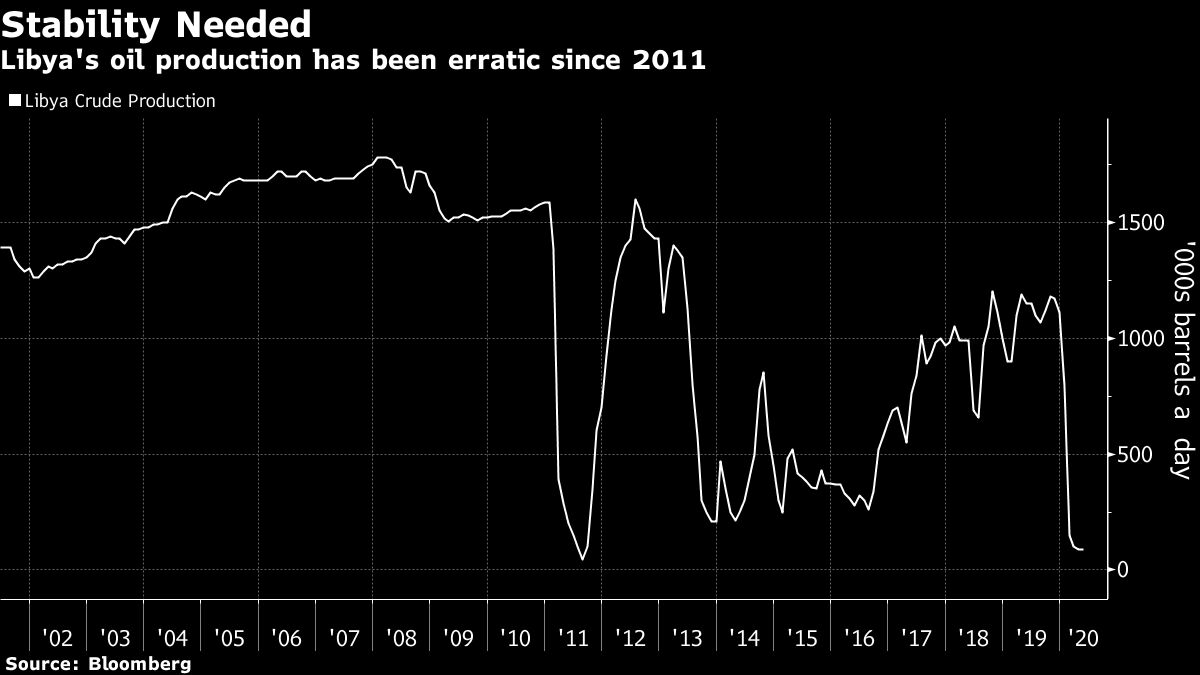
The restart will offer a flicker of hope for better times in Libya, but the country’s production has been dogged for the best part of a decade by power struggles and instability since the ouster of dictator Muammar Qaddafi back in 2011.
For other oil producers, extra Libyan barrels would be less welcome, coming at a time when OPEC and allied producers are doing everything they can to keep supplies off the global market and boost prices.
They agreed on Saturday to extend historic production cuts of 9.6 million barrels a day through July. Libya, with Africa’s largest oil reserves, is exempted from the cuts due to the country’s strife.
NOC said the first production phase at El Feel will start at a capacity of 12,000 barrels a day and is expected to return to full capacity within 14 days due to the damage caused by the long shutdown.
Sharara will take three months to reach full capacity, it said earlier.
As well as being sold for export, the barrels produced at Sharara are refined at the Zawiya oil refinery.
In mid-January, the NOC declared force majeure at Zawiya, a legal status protecting the NOC from liability if it couldn’t fulfill a contract for reasons beyond its control. The measure was also applied to several ports.
The loss of exports came amid a wider blockade on the country’s oil facilities and a military offensive by forces loyal to Khalifa Haftar, a commander based in eastern Libya.
His fighters shut down most of the country’s crude production, which plunged from 1.2 million barrels a day to some 90,000. The collapse has cost the oil-dependent nation billions of dollars in lost revenue.
For more articles like this, please visit us at bloomberg.com
©2020 Bloomberg L. P.