
(Bloomberg) — Senate Republicans expressed frustration Tuesday as big differences on major issues such as aid for the unemployed still stand in the way of a comprehensive virus relief deal.
That has some Republican senators pressing for floor votes on GOP-only proposals as the prospect of getting an agreement with Democrats this week becomes less likely.
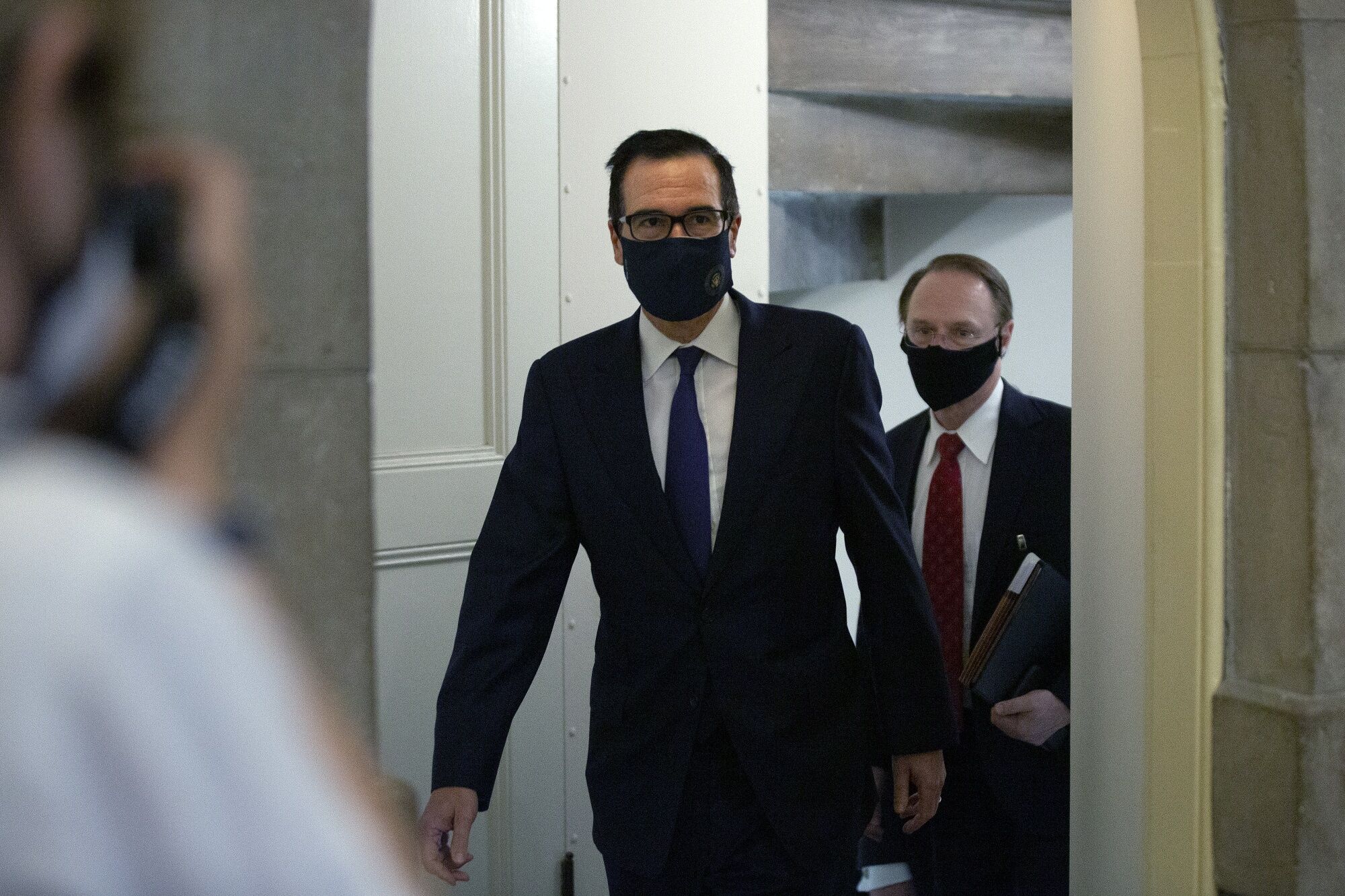
Treasury Secretary Steven Mnuchin and White House Chief of Staff Mark Meadows met GOP senators over lunch before another round of negotiations with House Speaker Nancy Pelosi and Senate Democratic leader Chuck Schumer.
“Right now their position has not really moved much,” Florida Senator Marco Rubio said of Democrats as he left the lunch.
Schumer said on the Senate floor that he believes the talks are making headway, but said the gap between the two parties remains “about priorities and about scale.”
Senate Majority Leader Mitch McConnell blamed Schumer and Pelosi for standing in the way of a deal by preventing committee chairs in both parties from engaging to resolve key issues that could nudge the talks forward.
“Every day the script is the same,” McConnell said. “And the script is we had a pleasant conversation, but we don’t feel like making a deal.”
Any glimmers of optimism that the talks over the past week had made some progress were tempered by the lack of resolution on some of the most critical issues, including an extension of the supplemental unemployment insurance that has expired, Democrats’ insistence on including state and local government aid and McConnell’s demand for liability protections for employers.
The negotiators are trying to reconcile differences between the $3.5 trillion Democratic plan passed by the House in May and the $1 trillion package of aid that Senate Republicans introduced last week.
Even if they reached a deal this week, it would likely take until next week before the Senate and House vote on it. In the meantime, the $2.2 trillion in stimulus passed in March is drying up.
“There’s pressure on both sides to do something,” Alabama Republican Senator Richard Shelby said. “There’s going to be some people hurting out there.”Asked whether he’d be willing to go beyond the $1 trillion stimulus that McConnell has proposed, Shelby said, “I wouldn’t want it to, but I think it might have to happen.”
Some lawmakers have begun talking with colleagues about elements of a stimulus plan.
Seeking Breakthrough
Senate Agriculture Committee Chairman Pat Roberts, a Kansas Republican, said the committee’s top Democrat, Debbie Stabenow of Michigan, is pushing him hard for a boost in food stamps as part of the stimulus package.
He said he agrees that an increase is needed, and hopes some agreement in this area helps propel the broader talks.
“This is a very unusual circumstance here with Covid-19 and the SNAP,” Roberts said, referring to the food stamp program. “So they are taking a look at it and I think we can get a positive result. If we can get a breakthrough on that, it could lead to some other stuff.”
Rubio, the chief architect of the Payroll Protection Program, said he’s concerned that they don’t have in place a plan for a new round of help for small businesses when the final deadline for the PPP hits at the end of the week.
He said there is already a bipartisan consensus on more small business aid.
“The frustration is that if it was just about small business and PPP, we could probably get a deal done fairly quickly,” he said. “But it’s obviously tied into all these other issues that are being debated and discussed.”
Rubio remained pessimistic of reaching a larger agreement any time soon.
Alaska GOP Senator Lisa Murkowski said she is talking to Democrats about ways they can work together to facilitate more progress.
“As I look to where we are, I feel the same discouragement, despair, despair that we’re here on the fourth of August” without answers, she said.
The negotiations have added urgency before the release this Friday of new unemployment numbers, which may show the effects of the surging virus forcing some states to pull back on plans to allow more businesses to reopen.
A group of U.
S. corporate leaders led by Starbucks Corp.’s former head, Howard Schultz, and including the chief executive officers of Walt Disney Co., Merck & Co., Alphabet Inc. and Walmart Inc. warned Congress on Monday that the country would see a “wave of permanent closures” of small businesses if they don’t get additional aid.
In addition, Federal Reserve officials warned Monday that another round of fiscal relief would be critical for the U.
S. economy.
For more articles like this, please visit us at bloomberg.com
©2020 Bloomberg L. P.