
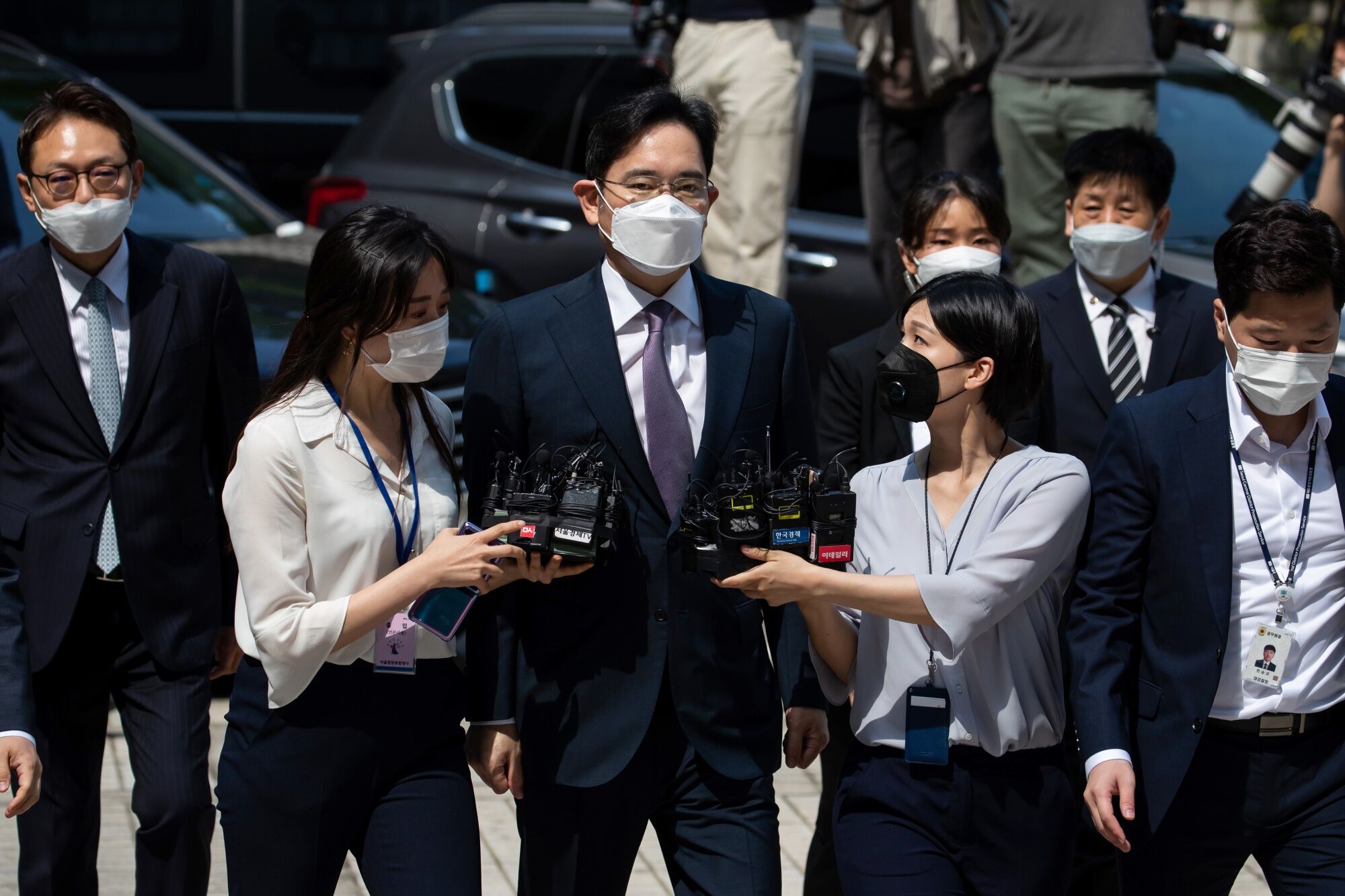
(Bloomberg) — Samsung Group’s billionaire scion, Jay Y. Lee, is embroiled in an increasingly contentious legal dispute with South Korean prosecutors over allegations of bribery and corruption. The clash, which dates back to 2015, centers on whether Lee and Samsung used illegal means to help him take control of the conglomerate founded by his grandfather. A Sept. 1 indictment on charges including breach of duty and violating capital market and auditing laws means the head of the world’s biggest electronics company will likely be on trial for years and could end up behind bars again.
1.
Who is Jay Y. Lee?
Lee, 52, is the vice chairman of Samsung Electronics Co. and heir apparent at South Korea’s most powerful conglomerate. After his grandfather founded the company, his father led the group until he suffered a heart attack in 2014. The elder Lee has reportedly been in a coma since then, while his son has become the de facto leader. But his succession has been complicated because he can’t simply take over his father’s assets.
South Korea has one of the heaviest inheritance taxes in the world, 50% on estates of more than $2.5 million. The elder Lee’s net worth is about $18 billion, according to the Bloomberg Billionaires’ Index.
2. What is the legal dispute all about?
South Korea’s special prosecutors first indicted Lee in early 2017 on charges of bribery and corruption, alleging that Samsung provided horses and other payments to a confidante of the former president to win support to help ease his succession.
The case inflamed public opinion against the country’s powerful conglomerates, or chaebol, and triggered the impeachment of then-President Park Geun-hye. Lee was initially convicted and sentenced to five years in prison, but the sentence was suspended in 2018 and he was released from jail. Still, the case wasn’t over. The Supreme Court in August 2019 overturned the lower court’s decision to suspend the mogul’s sentence and ordered a retrial of the whole case.
Those hearings have been delayed because prosecutors have argued that one judge involved is biased and inclined to go lightly on Lee. The Supreme Court now needs to decide whether to keep the judge involved or replace him, which could mean the trial would drag into next year.
3. So he’s a free man?
For now. In June, prosecutors sought an arrest warrant to send Lee back to jail because of a separate but related investigation.
But the Seoul Central District Court rejected the request, saying prosecutors didn’t have a valid reason to detain him. Shortly before, Lee had requested a civilian review panel assess the validity of his indictment, essentially trying to bypass the prosecutors. The attempt to jail Lee was seen by some as a reaction to his request. The panel of outside experts later recommended against an indictment, handing Lee a symbolic victory.
But prosecutors ignored the recommendation — a rare move that could cost them public support. Lee remains at liberty despite the indictment.
4. What is the other case against Lee?
Separate from the original bribery investigation but also related to succession, prosecutors wrapped up their probe and announced an indictment of 11 people including Lee and former Samsung executives, after digging into the details of a controversial merger between two Samsung Group’s units in 2015 and alleged accounting fraud that may have helped Lee’s efforts to gain control.
The investigation kicked off after South Korea’s financial regulator concluded that Samsung Biologics Co. intentionally violated accounting rules and inflated its value ahead of an initial public offering. Prosecutors suspect the violation was to justify the merger ratio between the Biologics’ major owner Cheil Industries and Samsung C&T, which helped bolster the value of the heir’s stake in Cheil and his influence at Samsung Group.
The Biologics unit has said it didn’t violate accounting standards.
5. What’s at stake for Samsung?
Samsung has largely continued business as normal during the years-long probe, and investors have been mostly unfazed. Samsung Electronics’ shares soared during 2019 and into the first months of 2020 before the coronavirus pandemic, despite prosecutorial scrutiny and investigations into more than 100 group officials.
Lee is now facing two trials. The new one may take as long as 18 months and could stretch another two years with appeals. Separately, Lee needs to attend the original trial related to bribery allegations once it resumes. A potential jailing of Lee is a greater concern for Samsung because his absence would render it more difficult to make major decisions, such as mergers and acquisitions or extraordinary investments.
6.
How does public opinion affect the situation?
Samsung is fighting not just for Lee’s liberty, but for its corporate reputation. The allegations that it used gifts to buy government favor so one of the country’s richest men could take over his family’s company are so explosive they inflamed public opinion and shook the political balance of the nation. Samsung and Lee are determined to clear their names.
The scion made a rare, personal apology in May, admitting missteps in the past and pledging not to hand leadership of the group to his children. Samsung has also been very active in helping South Korea’s battle against the coronavirus, dispatching its own doctors to help in the fight and helping to ramp up production of testing kits.
For more articles like this, please visit us at bloomberg.com
©2020 Bloomberg L.
P.