
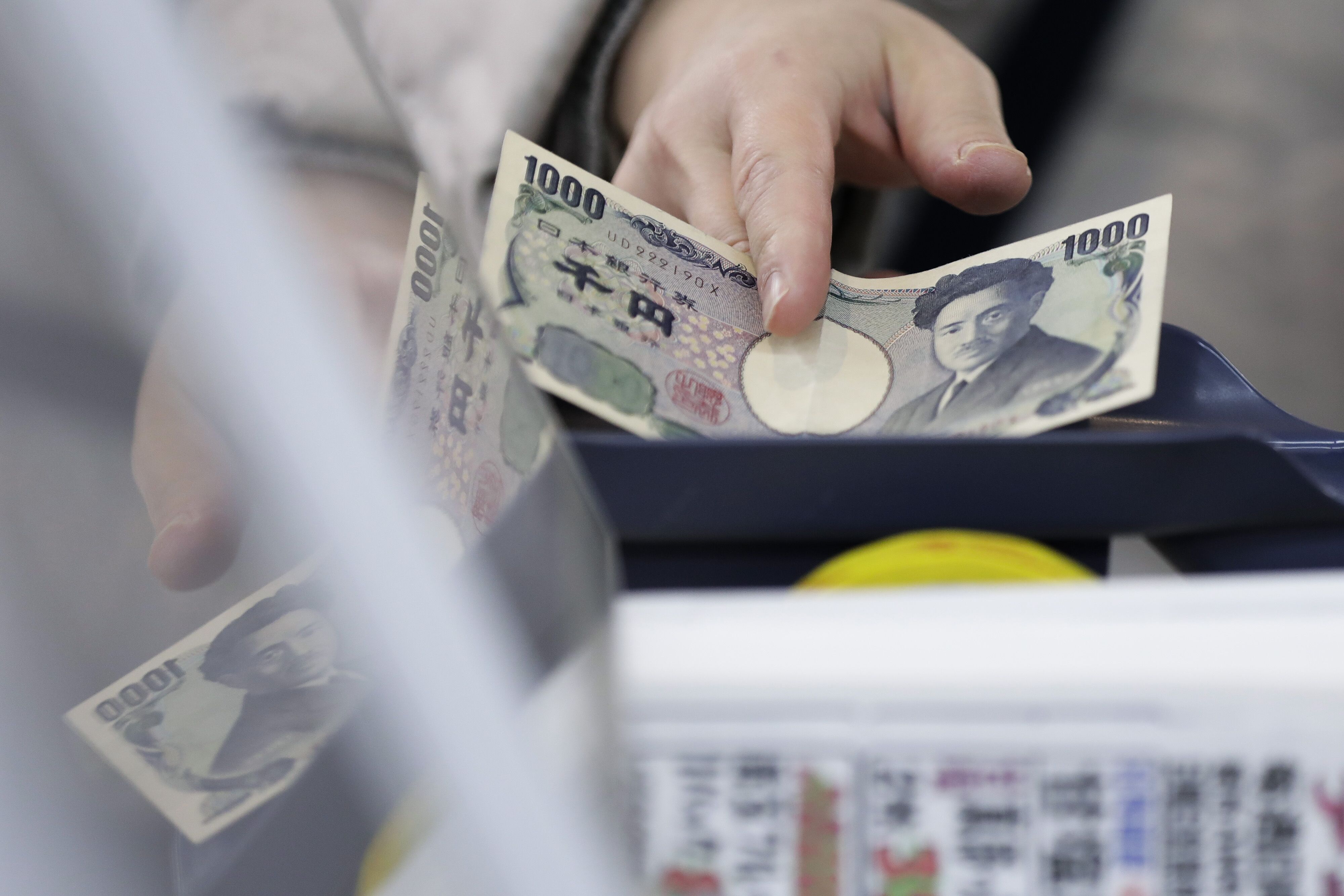
(Bloomberg) — The yen weakened past the closely-watched 150 per dollar level, keeping investors on high alert for further intervention to support it.
The currency slipped as much as 0.2% to 150.08 per dollar Thursday after a surge in Treasury yields to multi-year highs widened the gap with Japanese equivalents. That marked a new 32-year low for the yen, which has continued to slide despite the efforts of authorities to support it by intervening in the market in September.
“Don’t be surprised if the BOJ comes in again to intervene over the next few days, not to reverse this move but to simply introduce some two-way risk,” said Win Thin, global head of currency strategy at Brown Brothers Harriman & Co.
The Bank of Japan carries out intervention on behalf of the Ministry of Finance.
The yen reversed losses to trade little changed at 149.90 per dollar as of 9:02 a.m. in London.
Japanese authorities have said they will act if there are extreme moves in the currency rather than target any particular level. But 150 is seen as an important psychological level in Japan and a break may increase pressure domestically for further action.
Finance Minister Shunichi Suzuki reiterated Thursday that Japan was ready to act, saying in parliament that recent rapid, one-sided yen weakness was undesirable.
“We absolutely can’t tolerate excessive moves backed by speculation,” Suzuki said. “We’ll continue to watch moves in the foreign exchange market with a high sense of urgency and will take appropriate responses against excessive moves.”
The yen has wiped out last month’s intervention-driven gains despite the government confirming an almost $20 billion spend and unleashing a barrage of warnings to dissuade traders from testing its resolve.
It has tumbled 23% against the greenback this year as traders focused on the widening yield differential between the US and Japan, which favors dollar assets.
“Given the upwards trajectory of US bond yields, a dollar-yen at 160 in coming months is not out of the question,” said Alvin Tan, head of Asia FX strategy at RBC Capital Markets. “The only reason it did not reach 150 earlier is because the market is constantly worried about potential BOJ intervention.”
While Treasury yields are free to rise, Japan’s 10-year benchmark is capped by the BOJ’s curve-control policy, which seeks to keep it at or under 0.25% in a bid to boost the economy.
The consequences of that policy was evident once more Thursday when the central bank announced unscheduled bond purchases as the 10-year yield briefly rose above that ceiling.
BOJ Announces Unscheduled Bond Buying as Key Yield Broke Ceiling
Subtle Intervention
The yen’s continued slide is also fueling speculation that authorities are subtly intervening as traders are observing sudden, short-lived bursts of strength when fresh lows beckon.
So-called stealth intervention typically involves entering the market on a smaller scale that is more difficult to detect instead of the sharp sudden shifts associated with more regular intervention.
Stealth intervention “is a waste of time and not really addressing the underlying issue,” said Bipan Rai, head of foreign-exchange strategy at Canadian Imperial Bank of Commerce. “In order to really stabilize dollar-yen, the selloff in long end US rates needs to slow, or reverse.
Failing that, the BOJ would have to amend its yield-curve control program”
–With assistance from Stephen Kirkland, Ryotaro Nakamaru, Yuko Takeo and Greg Ritchie.
(Updates prices, adds analyst comment in ninth paragraph.)
More stories like this are available on bloomberg.com
©2022 Bloomberg L. P.