
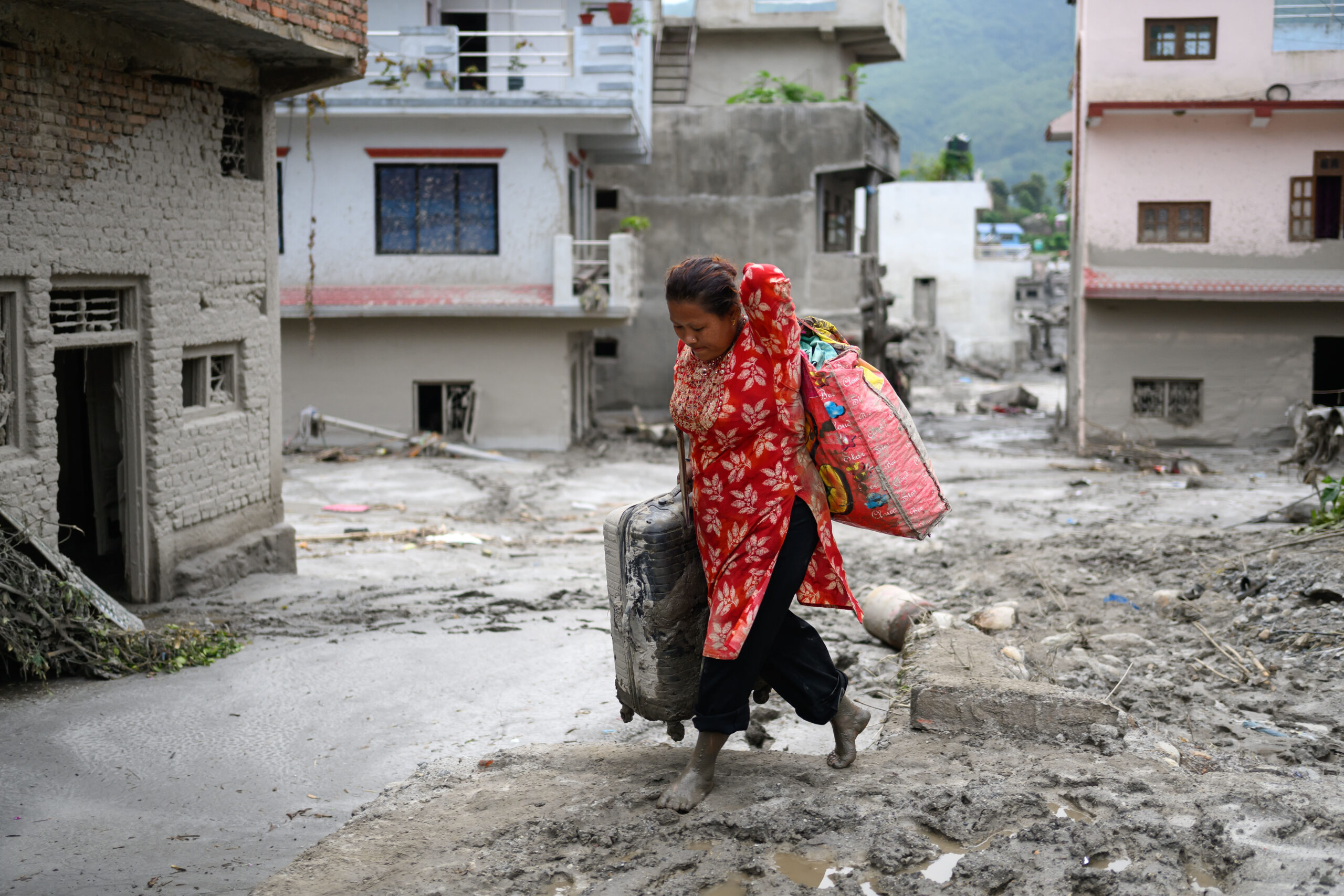
Number of missing in Nepal, China floods soars past 2,400
Rescuers in Nepal and China were still battling Saturday to locate thousands of people missing days after a deadly, tsunami-like wall of water and debris swept through the Himalayan region, engulfing villages. The number of missing soared past 2,400 on Friday as emergency teams said they had recovered 623 bodies — with some of the dead possibly swept downstream as far away as India. In an area home to vast energy infrastructure projects, Nepal’s disaster authority added 933 hydropower workers to a missing persons list already including trekkers and pilgrims to Tibet’s sacred Mount Kailash.
Those that made it out say they have lost everything and now face an agonising wait to discover the fate of missing loved ones, and the prospect of rebuilding their lives from nothing.”All the settlements near the river were swept away. There is nothing left,” survivor Buddhi Ram Dangol told AFP. Samjhana Thing said she had been waiting three days for news of her missing brother.”We don’t know anything.
Hopefully he is in a safe place,” she said.- ‘Enormous’ trauma -The trauma of Wednesday’s catastrophe has been “enormous”, and as many as 93,000 people may have been affected, the Red Cross said, with the death toll expected to rise. Emergency teams had been racing to retrieve survivors from affected zones, where the widespread devastation meant food and water supplies were running out.
Compounding the search for the missing have been fears of further flooding in affected areas. The deluge of ice and mud caused huge lakes to form, and one of these formations has become a direct threat to emergency workers scouring the region for survivors. Nepali police urged all rescuers to “immediately move to a safe location”, saying they had received information that “a water dam has burst again on the Tibetan side”. In Tibet, where Chinese authorities are the only source of information, Beijing suspended its rescue operation at the hardest-hit area of Gyirong over the risk of renewed flooding, before saying the threat had eased.
State news agency Xinhua reported early Saturday morning that two villagers had been rescued in the area.- ‘All swept away’ -On the Nepali side of the border, the military located people trapped in the tunnel of the Trishuli 3A hydropower project, where they were working to find a way in to extract the survivors.”Two helicopters have been dispatched, but it is challenging because it is tough to even locate the entry points of the tunnel,” army spokesman Raja Ram Basnet told AFP.
Some 350 workers and residents have been brought to safety from the site, he added, but efforts were ongoing to rescue more than a hundred trapped in the same area. Workers rescued from other dam projects along the Trishuli valley described a disaster that unfolded with terrifying speed. Buddha Tamang told AFP he survived only because he was inside a tunnel at the dam where he worked when the flood struck.”The senior officers working on the other side, they were all swept away,” Tamang, who was airlifted on Thursday after being marooned for more than 24 hours, told AFP.
Nepal reported a death toll of 616 people on Saturday. There are 1,924 people, including 517 foreigners, who are out of contact in Nepal, the disaster authority said earlier. In India, authorities said they had recovered seven bodies from rivers flowing from Nepal, believed to be flood victims. Across the border in Tibet, which is largely inaccessible to foreign journalists — seven people died and 554 remain missing, the state Xinhua news agency reported early Saturday.
Authorities also said they had evacuated 555 stranded tourists and 499 Chinese residents from Tibet.- Pilgrimage route -Scores of Hindu devotees from across the world are among those missing on the border, as many were on a pilgrimage to Tibet’s Mount Kailash. Sivaranjani Muthunathan was travelling by bus with 56 others towards the Chinese border when they became stuck in what they thought was a traffic jam.”Then there was fog, smoke, something that seemed to suddenly engulf us,” Muthunathan, 46, told AFP on Friday, showing a phone video she recorded of a torrent surging towards her.
Around them, vehicles were swept away or buried under mud.”One by one, we also climbed out through the driver’s side,” then scrambled up a hill, she said.burs-oho/fox
Sat, 29 Aug 2026 04:15:24 GMT