
South Sudan postpones first national elections until February
South Sudan on Saturday postponed its first national elections from December to February amid growing violence, political battles between its president and deposed vice president and slow voter registration. Legislative and presidential elections had been scheduled for December 22, having already been delayed several times. Election commission secretary general Ahon Malou Lueth confirmed the change to AFP but gave no details.
Commission spokeswoman Josephine Achiro later said the extension to February 11 would allow implementation of additional processes including distribution of registration materials and civic education.”We didn’t postpone the elections. We have just adjusted the time to allow other processes to be implemented and that is according to the law,” Achiro said.”Article 57 of the National Elections Commission gives us authority to adjust the elections timelines.” – Conflict warning – South Sudan became independent from Sudan in 2011, making it the world’s youngest country, but Kiir’s and Machar’s forces fought a civil war from 2013 to 2018 that killed at least 400,000 people.
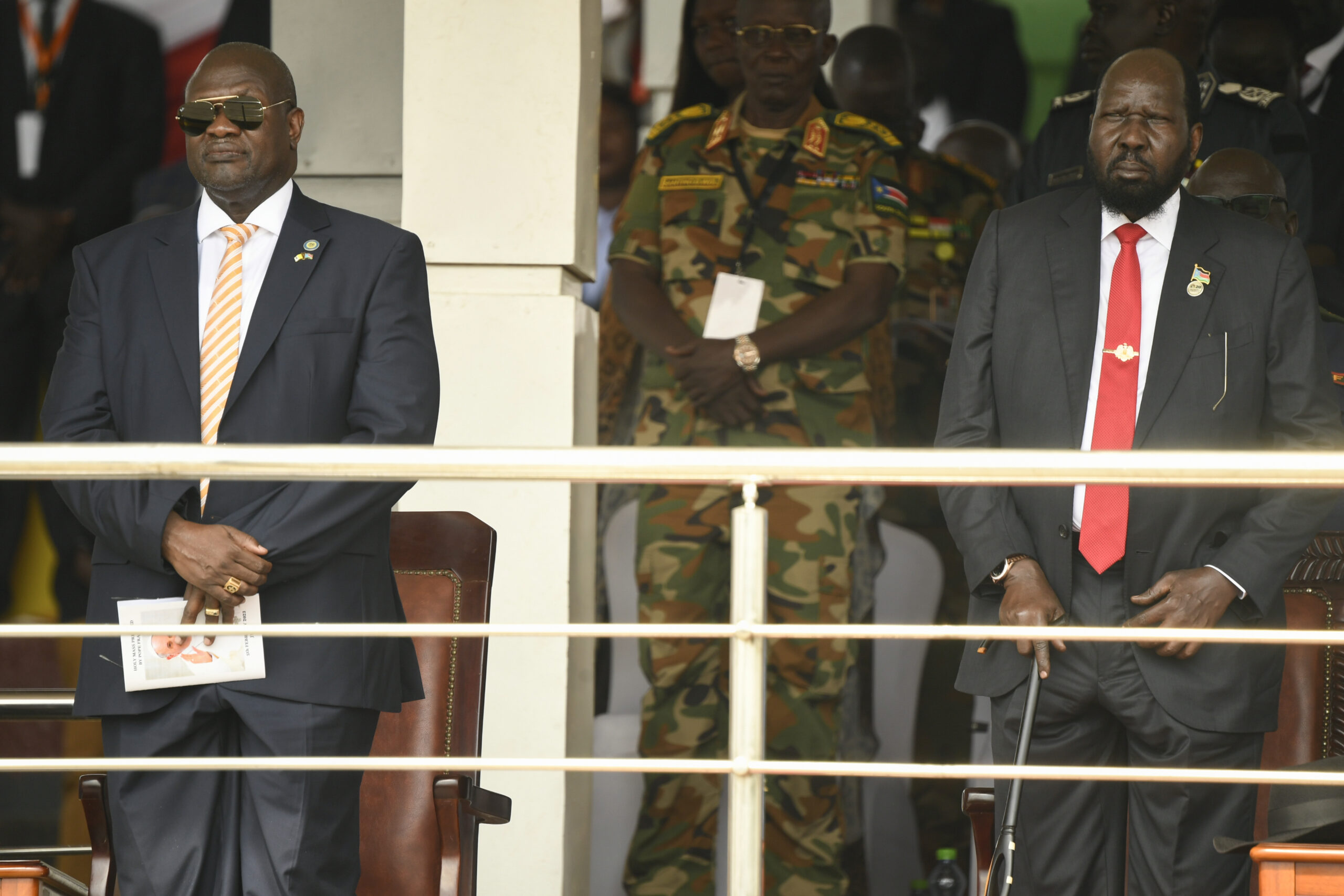
A 2018 peace accord brought in a government of national unity with Kiir as president and Machar his deputy, their joint administration tasked with paving the way to elections in 2022. Those elections, however, have been repeatedly postponed and the administration has implemented virtually none of the provisions in the peace agreement. Machar was suspended and charged with treason and murder in 2025.
The UN Commission on Human Rights in South Sudan recently warned a December election could set off widespread conflict if used to dismantle the 2018 accord. “A negotiated settlement has been displaced under cover of elections,” Yasmin Sooka, Chair of the commission, said in October. Sooka warned of a “constitutional coup through legislative reforms: the unilateral dismantling of the inclusive power-sharing settlement and concentration of all authority in the president”. The UN commission also repeatedly warned about conditions in the country, including the displacement of tens of thousands of people and the disruption of international humanitarian operations. – Logistical challenges – With the World Bank estimating some 90 percent of the country’s 15 million inhabitants have no state-recognised identification, complicating electorate registration, the schedule for a December vote had presented significant logistical challenges.
Authorities have set up more than 3,100 centres across the country for voter registration, a process theoretically due to last two weeks, but officials said not all the necessary equipment was yet to hand. Even so, registration was slated to start from Saturday. An AFP correspondent witnessed early evidence of it at an office in a residential district of capital Juba, where some 100 people gathered for the purpose, surrounded by security forces.
Some activists did not hide their frustration at the ongoing wait to vote, querying the reasoning behind what the commission described as a “readjusting” of the election timeline.”There are no elections in South Sudan as I have been telling you,” rights campaigner Malong Deng told AFP.”The government tries to control the power by all means.””I don’t like more postponement.
Let them abide by the new timeline,” said Gladys Lino, 22. For another resident, Kawac Deng, “the more the elections are extended, the more problems increase.”
Sat, 14 Nov 2026 14:45:35 GMT