
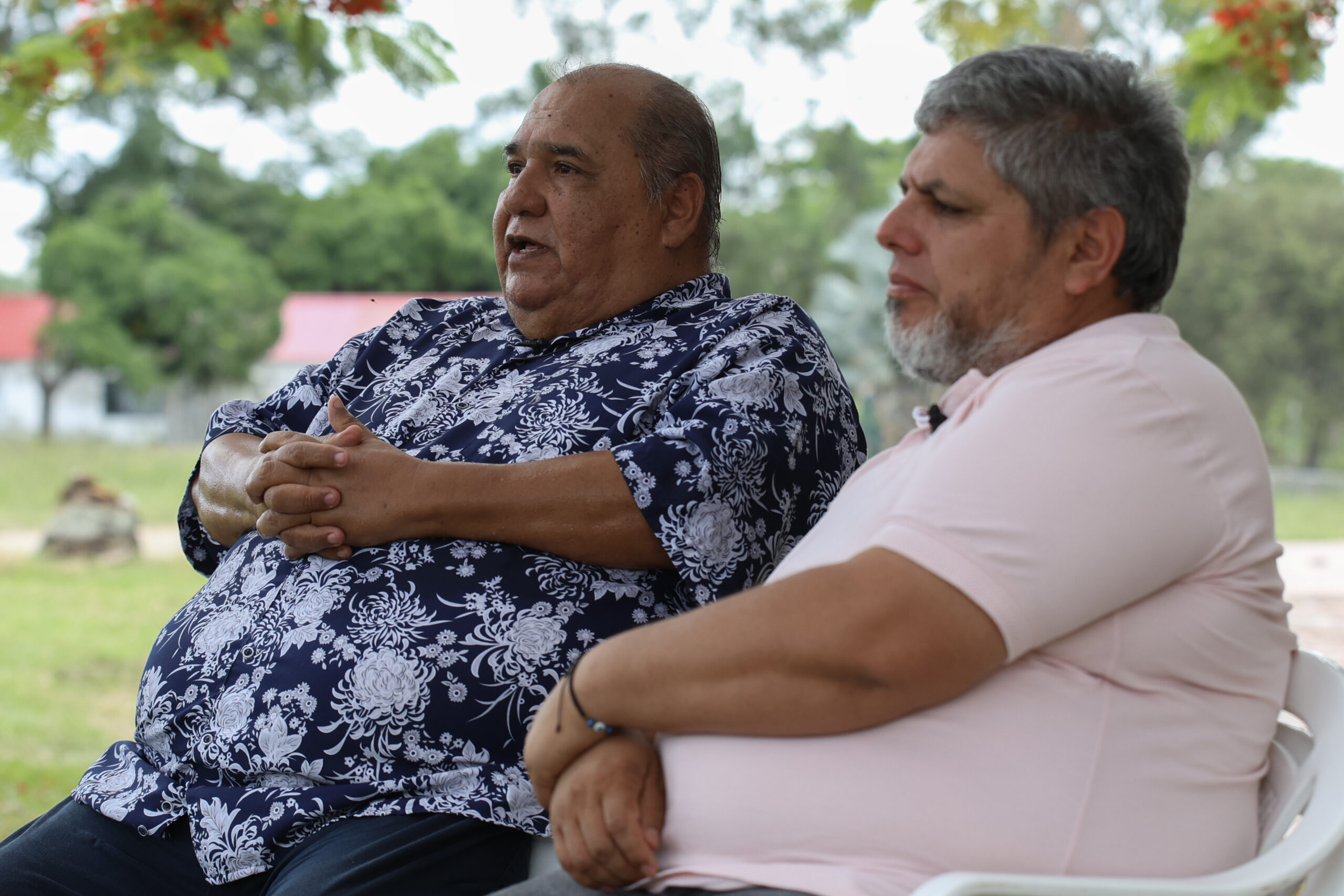
Making peace with the past: an ex-FARC fighter and his hostage
Sitting side by side under a blood-red flame tree Hector Mahecha and Armando Delgado tease each other about middle-age spread with an ease that belies their dark shared past. Armando is a former regional commander of the defunct Revolutionary Armed Forces of Colombia (FARC) guerrilla group, which terrorized the country for decades before agreeing in 2016 to lay down arms. Hector is one of Armando’s former hostages.
Today, the two are firm friends. Such is the lingering enmity in Colombia towards FARC that some view their closeness with hostility.”Some people see us as traitors,” Hector admitted in a joint interview at a farm teeming with hummingbirds in western Tolima department that the pair hope to turn into a peace park. The landmark treaty signed by the state and FARC on November 24, 2016, after four years of talks brought peace to large parts of Colombia.
But the wounds of the conflict that killed over quarter of a million people and displaced millions still fester. Colombia set up a peace tribunal to try the worst crimes committed by FARC and state security forces and to promote reconciliation. But many Colombians consider that the guerrillas, who were spared prison in return for admitting to their crimes, got off too lightly. US-backed President Abelardo de la Espriella, who came to power in August, has vowed to crush all remaining guerrillas and drug traffickers militarily.
He has posed for photographs next to dead fighters and signed a bomb before it was dropped on a FARC splinter group, killing four people.”This hurts because we know what war is,” Armando, whose real name is Jhon Jairo Olivero Grisales, but who still goes by his FARC alias, told AFP gravely.”We saw comrades die, blown away by bombs, but we also saw soldiers die from the bombs we planted, as well as civilians, who suffered the most.” – ‘No grudge’ – Hector and Armando’s relationship got off to an inauspicious start, to say the least.
They met at the height of the conflict between the state, leftist guerrillas, paramilitaries and drug cartels when Hector traveled to FARC’s mountain hideouts to hand over “vacunas” (extortion payments) on behalf of his family’s beer supply business. Despite coughing up each month, Hector’s father was kidnapped by FARC in 2004. Six months later, when he came with a ransom payment to collect his dad, Armando coolly informed him of “a change of plans.””Your dad’s leaving but you’re staying,” Hector recalled the graying 48-year-old sitting next to him with his head bowed as saying.
Hector, an amiable bear of a man, was released after nine days, but the terror campaign intensified. The Mahechas’ home and warehouse were bombed, nearly wiping out the business. Hector’s daughter required seven operations to recover from her injuries.”I hold no grudge in my heart, that chapter is closed” said Hector. – Body bag or prison – Such absence of bitterness is rare in Colombia, where a resurgence in violence by insurgents fighting over the lucrative cocaine trade, illegal gold mines and extortion rackets has soured many on dialogue.
Last year, a presidential candidate was assassinated on the campaign trail. Car bombings, kidnappings and drone attacks are creeping up. De la Espriella argues that the peace process created a “perverse system of impunity” that allowed organized crime to flourish. He wants to slash the funding of the peace tribunal and close it altogether in 2028. Armando, who joined FARC at 13 after seeing his stepfather killed by paramilitaries, argues that high levels of rural poverty are chiefly to blame for the bloodshed.
Child recruitment by armed groups has quadrupled in the past five years, the UN children’s agency said earlier this year. Insurgents prey on young people who have “no other opportunities,” Armando, a stocky man with a blinding white smile, said. – 500 former rebels murdered – Many of FARC’s victims complain that the guerrillas received more support to rebuild their lives than those they kidnapped, injured, orphaned or extorted.
Armando, who is accompanied everywhere by two bodyguards, insists that demobilized rebels haven’t had it easy either. Over 500 of the more than 13,000 FARC members who signed the peace deal have been murdered in the past decade. He himself has had to move homes at least four times over threats against him and his family. He is adamant that the peace deal was “the best thing that happened” to the country and warns: “If it ends, Colombia will be plunged into war.”
Mon, 23 Nov 2026 11:21:58 GMT