
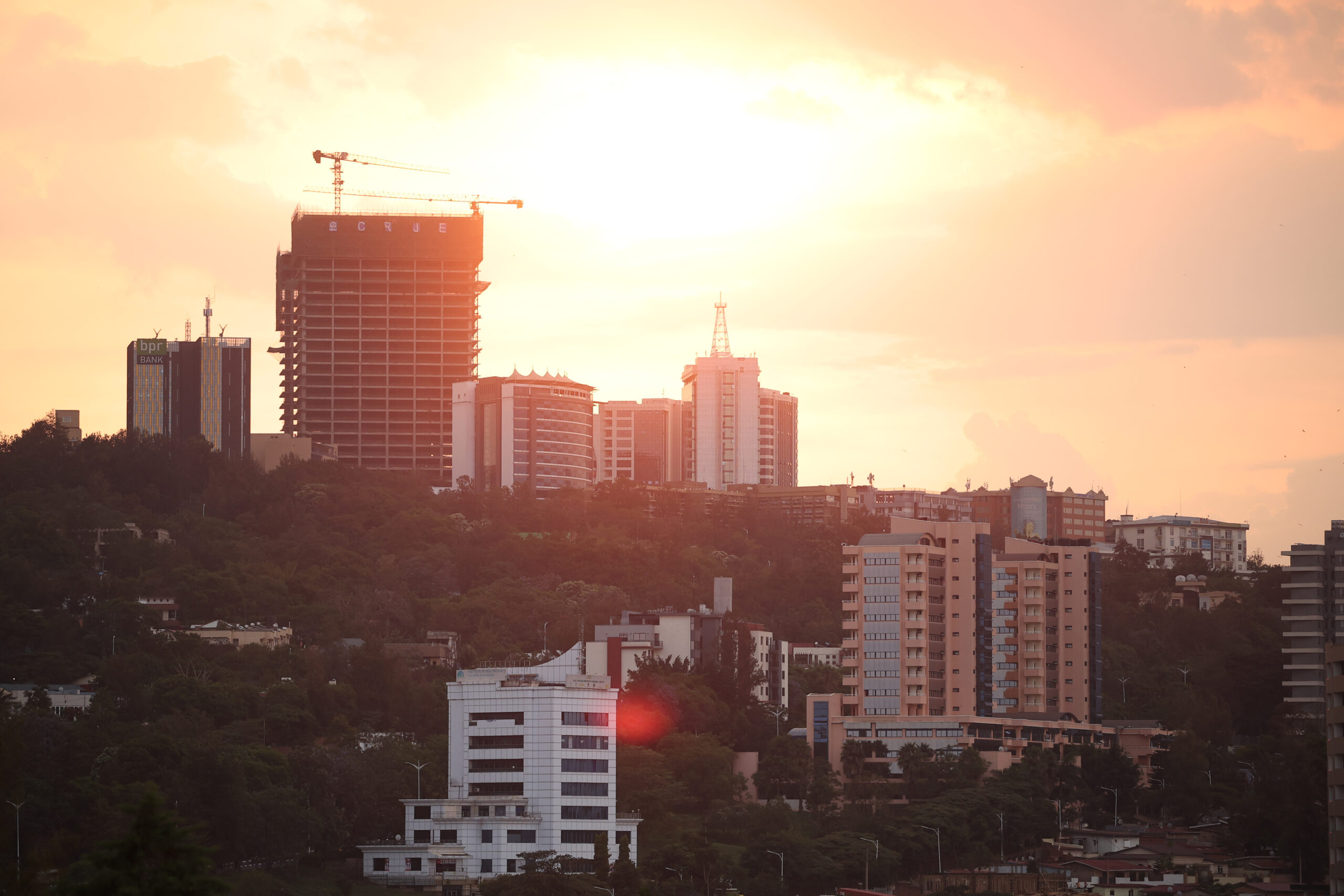
EU countries’ migrant return hub plan for Rwanda sparks concern
A migrant deportation centre planned by five European countries will be located in the Rwandan capital, despite the United Nations and Human Rights Watch (HRW) voicing concern, Rwandan government sources told AFP on Tuesday.”Forcibly deporting people, including children, to a country where the evidence points to their rights being at risk, is a striking abdication of responsibility and humanity,” said HRW’s Judith Sunderland.”A deal with Rwanda is likely to cause real harm in addition to not achieving any defensible policy objective,” she added.
UN rights chief Volker Turk likewise voiced disquiet.”We know how difficult, politicised and polarising migration issues have become,” Turk said in a statement.”While we are not privy to the text of the proposal, we are concerned about the human rights risks raised by the proposed transfer of people from five EU countries to Rwanda, where they have no genuine connection and which has its own set of human rights challenges.”Turk urged a comprehensive approach anchored in human rights, to include the expansion of regular migration pathways.
Austria, Denmark, Germany, Greece and the Netherlands on Monday unveiled a plan to establish the centre in Rwanda — the first such facility outside the European Union. The centre is expected to host around 100 asylum seekers whose asylum applications have been rejected and who have exhausted all avenues of appeal in one of the five countries. Upon arrival in Rwanda, they will be given residence permits and be accommodated in a “welcome centre”, the government said.
A government source in Kigali, speaking on condition of anonymity, said it would likely be the Gashora transit centre, some 60 kilometres (37 miles) from Kigali, which has lately been used for asylum seekers from Libya and has been recently expanded. A hotel may also be used, the source added. The EU countries have already said they will not use the facility set up for Britain under its aborted migrant relocation deal with Rwanda, although another government source hinted on condition of anonymity it could be in the frame.
However, Elisee Kalyango, who manages asylum affairs for the government, told AFP it was still too early to announce the details. “Among the things to figure out are their housing and how their other needs will be taken care of,” he said.”Government learned a lot from the previous asylum deal with the UK, and all the lessons will inform us how the EU asylum seekers will be handled,” he added.- ‘Under-resourced’ -HRW had already highlighted Rwanda’s “well-established record of repression of dissent, arbitrary detention, ill-treatment in detention” and support for an armed anti-government group in the neighbouring Democratic Republic of Congo.
There was also pushback from an opposition politician, Frank Habineza, leader of the Green Party. “People who run to these European countries should be a responsibility of those European countries. These countries have more resources to handle their problems. Why send them to a poor, under-resourced country like Rwanda?” he said. The head of Rwanda’s Legal Aid Forum, Andrews Kananga, insisted to AFP the country had established the legal framework to host asylum seekers and deal with their claims under a revised refugees law passed in 2024.”From the legal front, Rwanda is ready to host asylum seekers from Europe,” he said.”The country already has many communities from outside Rwanda.
People are integrating freely,” he added. A source at the Rwandan office of the United Nations International Organisation for Migration (IOM), speaking on condition of anonymity, said it had been rehiring staff recently fired due to aid cuts. “IOM has even put up job adverts to hire more staff. It’s obvious this has been in preparation for the EU refugees,” the source said. An IOM source referenced a similar scheme which has seen Rwanda receive around 20 migrants expelled from the United States as part of an accord to take up to 250 migrants from the United States in return for $7.5 million.
If the European project comes to fruition, the five EU states are also reportedly looking further afield, notably to Uganda and Uzbekistan. A Ugandan source told AFP that there had been conversations to that effect with EU states but at a “very preliminary level.”str-cjc-jcp-bur/cw/gil
Tue, 17 Nov 2026 19:15:48 GMT