
Nepal-Tibet disaster: what we know
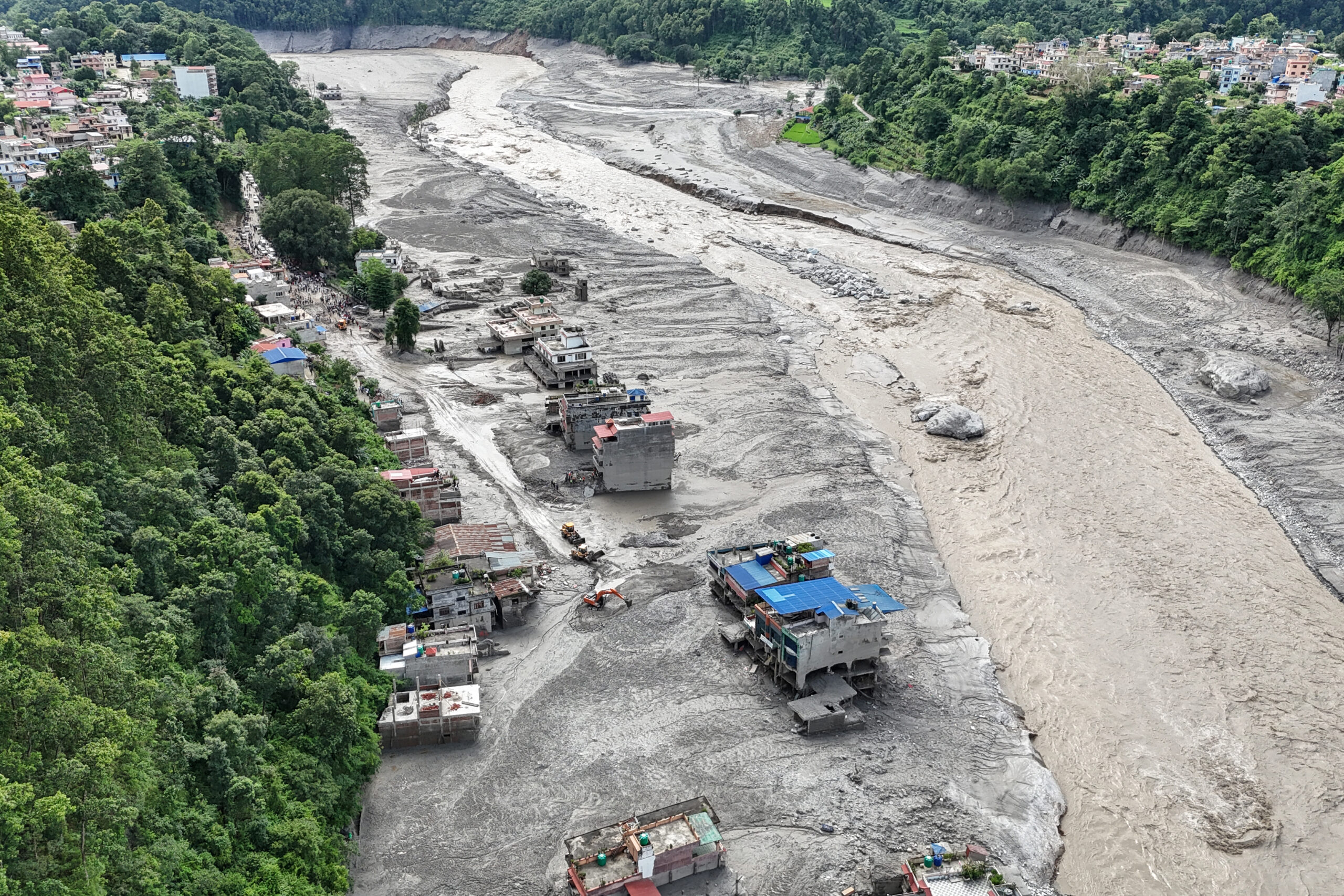
Catastrophic flooding and landslides on the Nepal-Tibet border unleashed waves of water and debris that killed more than 360 people and left more than 1,400 missing. Here is what we know so far:- What happened? -The exact sequence of events is still unclear, but on Wednesday morning, a tsunami-like wall of freezing water and mud wiped out towns under a torrent of sludge, engulfing homes, smashing bridges and dams, and sweeping vehicles away like toys on both sides of the border.
It gouged a path nearly 170 kilometres (105 miles) through Nepal, experts said, hitting villages and towns on the path of two rivers — Bhote Koshi and Trishuli. Surveillance footage from the Chinese side showed a wall of mud and water crashing over a building as terrified people ran. Emergency teams are racing to pluck survivors from affected zones, while Nepali soldiers used sniffer dogs and heavy equipment to search for bodies buried under the suffocating dirt.- Hundreds missing, many dead – At least 362 people have been reported dead, 359 of them in Nepal and three at a Tibet border hub.
Their nationalities have not yet been confirmed. Nepal’s disaster agency said 910 people were unaccounted for on Thursday, including at least 517 foreigners. Its tourism board put the number of missing tourists, both Nepali and foreign, at 667 in total. Chinese authorities have said the disaster caused “major casualties” and reported another 558 missing — 260 of whom are foreigners.
In addition to Chinese and Nepalis, the missing include Indians, Americans, Malaysians, Europeans, Australians, Ukrainians and many more. Some 77 pilgrims from across the world were at the Nepal-China border immigration office when the flood hit on Wednesday, popular Indian spiritual leader Sadhguru said.- Aid -Promises of aid and assistance came in soon after reports of the scale of the disaster.
UN relief chief Tom Fletcher said Thursday he had allocated $2 million “to save lives with emergency medical care, shelter, water”. The World Health Organization (WHO) has sent medical kits to provide basic health services to 10,000 people for three months, while the World Food Programme and UN children’s fund are readying relief supplies. The International Federation of Red Cross and Red Crescent Societies (IFRC) said it had allocated more than $1 million.”Many families have lost their homes,” the IFRC’s chief in Nepal, David Fisher, told AFP, adding that whole settlements had been “wiped out”.
Britain’s King Charles said he was “heartbroken” by the tragedy as the UK government offered $6.8 million in aid. The European Union said it had activated its Copernicus satellite surveillance system to aid recovery efforts and was ready to provide more help. Neighbouring India sent a military cargo plane with aid hours after the disaster, with further planes flying in nearly 50 tonnes of supplies.
Delhi was also sending in steel Bailey bridges. Bangladesh said it was sending tents, mosquito nets, food and body bags, according to a government statement. Japan was sending an emergency response team, while Switzerland has said it had allocated more than $600,000. The United States has pledged $500,000.- Cause -While the explanation for the calamity has evolved since it struck, it appears linked to a collapsing glacier.
Within hours of the flooding, Nepal’s authorities said an earthquake likely triggered a landslide, in turn blocking a river and sending water gushing downstream. China also reported a landslide, saying a border hub between Tibet and Nepal had been hit by a surge of debris. The Nepali authorities’ explanation aligned with a US Geological Survey report of a quake in Tibet that was north of the disaster zone. However, USGS subsequently updated its conclusion to say the seismic activity initially reported as a quake “was instead a glacial collapse and debris flow” that “caused subsequent catastrophic impacts downstream”.”Additional analysis of nearby seismic stations, long period seismic waves, and satellite imagery led to the determination that the seismic event was instead a glacial collapse and debris flow, and that no earthquake had occurred.”Fears of more potential floods remain, with water trapped by the immense piles of debris blocking the valley.burs-st/sbk
Thu, 27 Aug 2026 15:24:06 GMT