
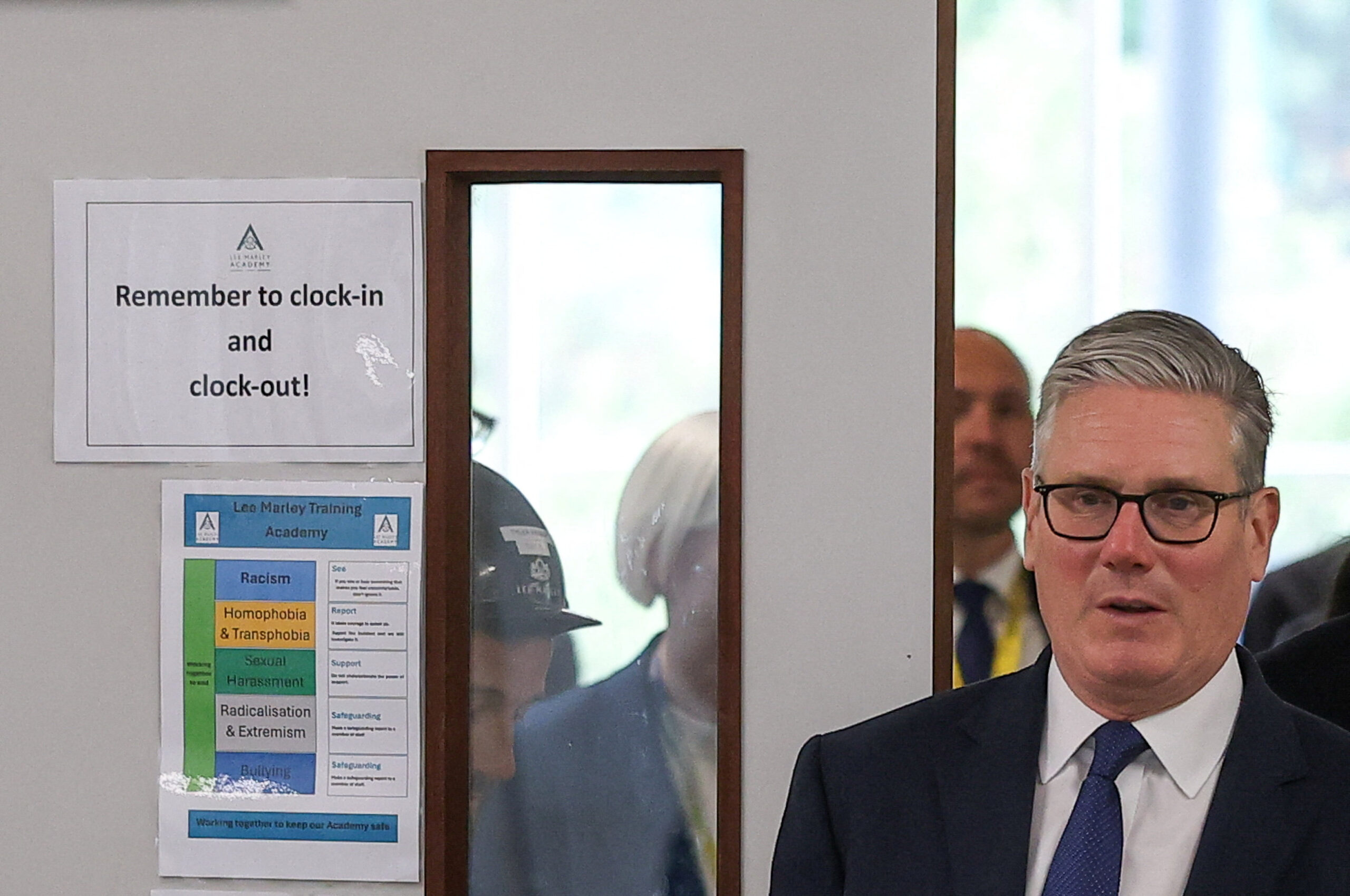
UK PM Starmer resists calls to quit as Labour divided
UK Prime Minister Keir Starmer battled to remain in his job Tuesday, as four junior ministers resigned their posts and dozens of lawmakers called for him to step down in the wake of heavy defeats in local and regional elections. The results capped a miserable few months for Starmer, who has been under pressure for failing to spur promised economic growth to help Britons suffering with the cost of living.
Criticism of policy U-turns has also been compounded by scandal over his appointment, then sacking, of Peter Mandelson, a former friend of US sex offender Jeffrey Epstein, as ambassador to Washington. But on Tuesday, more than 100 Labour members of parliament signed a statement backing their leader, highlighting the deep divisions within the beleaguered ruling party. Several senior ministers also rallied around him after he told them in a crunch meeting that he was getting on with governing the country and dared any leadership hopefuls to challenge him.
As of 6:00 pm (1700 GMT), no senior member of Starmer’s top team had gone public to demand that the premier quit. “The Labour Party has a process for challenging a leader and that has not been triggered,” Starmer told ministers.”The country expects us to get on with governing. That is what I am doing and what we must do as a cabinet,” he added.- ‘Do the right thing’ -More than 80 of Labour’s 403 members of parliament have now called for Starmer to quit immediately or to set out a timetable for his departure.
Miatta Fahnbulleh on Tuesday became the first junior minister to resign, calling on Starmer “to do the right thing for the country and the party and set a timetable for an orderly transition”. Jess Phillips then quit as safeguarding minister, telling Starmer in a letter that she was not seeing the change “I, and the country expect”. Junior ministers Alex Davies-Jones and Zubir Ahmed followed.
But deputy prime minister David Lammy told the BBC that Starmer has his “full support”, adding that “no one seems to have the names to stand” against him. Defence Secretary John Healey also backed the prime minister, warning that “more instability is not in Britain’s interest”, while a spokesman for interior minister Shabana Mahmood said she would not be resigning.
More than 100 Labour MPs signed a statement arguing that “this is no time for a leadership contest”, adding that the job of winning back the trust of the electorate “needs to start today — with all of us working together to deliver the change the country needs”. Under party rules, any challenger would need the support of 81 Labour MPs — 20 percent of the party in parliament — to trigger a leadership contest.
A contest would likely spark damaging infighting, with MPs from the left and right of the party battling to position their preferred candidate or shore up Starmer. Starmer, whose government is due to lay out more detailed legislative plans on Wednesday, has vowed to contest any challenge.- Who could succeed? -It has long been rumoured that Health Secretary Wes Streeting and former deputy prime minister Angela Rayner could try to oust Starmer.
But neither is universally popular within Labour. Another much-touted contender, Andy Burnham, the mayor of Greater Manchester in northwest England, is unable to stand as he is not an MP. Some of his supporters want Starmer to set a date for his departure that could allow Burnham time to secure a seat. Pressure on Starmer has soared since Labour lost hundreds of councillors to the hard-right Reform UK party and left-wing populist Greens in last Thursday’s polls.
Labour also lost its century-old dominance in Wales and took a hammering from the Scottish National Party in the devolved parliament in Edinburgh. On Monday, he pledged that Labour would be “better” and bolder to assuage disgruntled voters impatient for change.
Tue, 12 May 2026 17:41:33 GMT