
Ukraine-Russia truce spotlights rare thaw between top officials
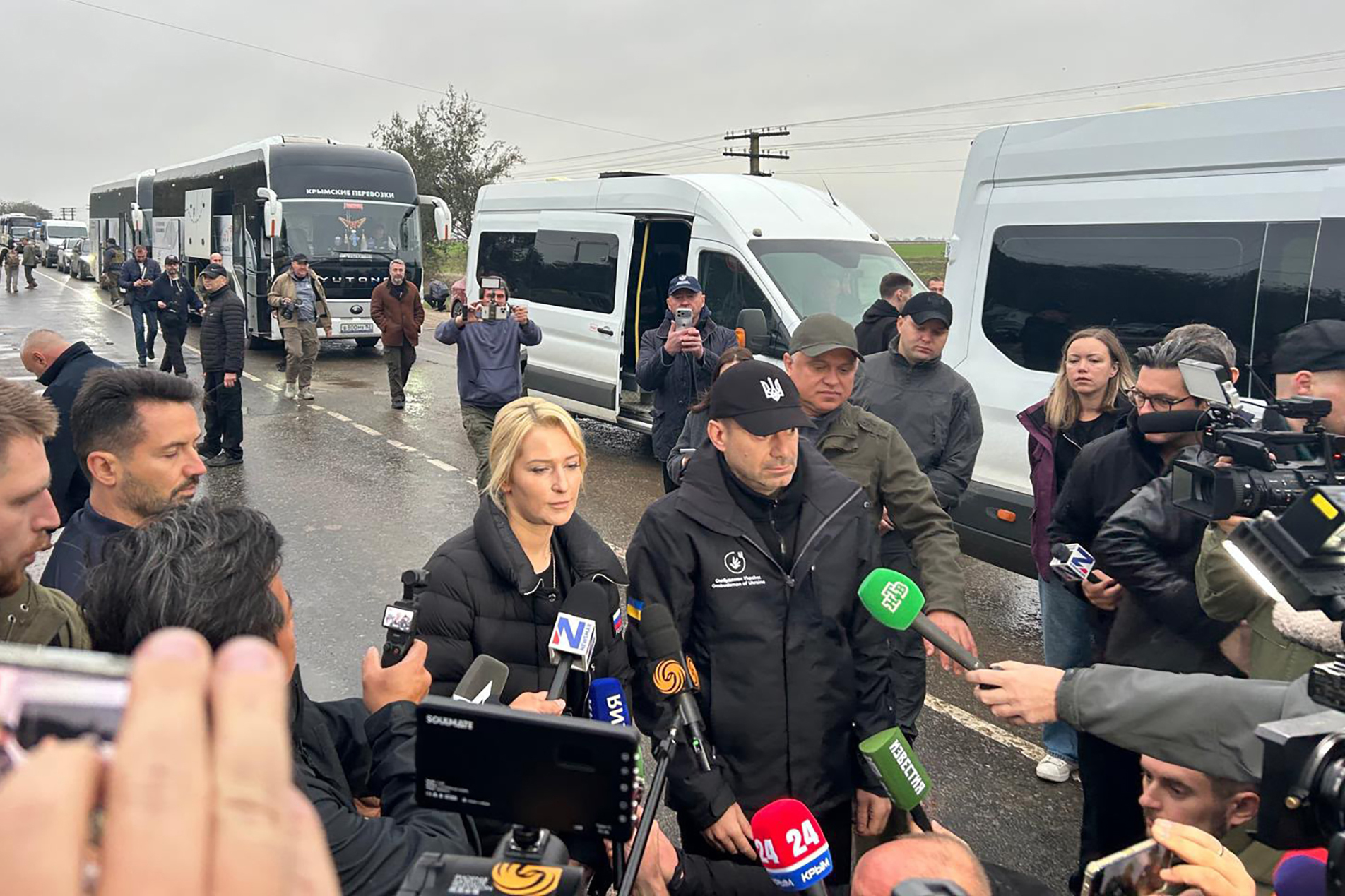
Russia’s human rights ombudsman Yana Lantratova nodded along as her counterpart from Kyiv, Dmytro Lubinets, spoke Ukrainian to brief the media about the longest truce between their warring countries. Clad in caps and jackets emblazoned with their respective national symbols, Lantratova and Lubinets, often appearing side-by-side, on Friday oversaw the local ceasefire in the Russia-occupied Ukrainian city of Oleshky.
The mission, brokered by US First Lady Melania Trump, to evacuate the town and deliver humanitarian aid proved to be one of the most substantial instances of Russian-Ukrainian cooperation since Moscow sent its troops into its neighbour in 2022. It also provided rare wartime images of friendly exchanges — nods, smiles and joint selfie videos — between top officials from Moscow and Kyiv. The unlikely rapport between 37-year-old Lantratova and Lubinets, 45, prompted a flurry of posts on Ukrainian social media, with some half-jokingly suggesting the pair’s cordial relationship could spur a further thaw or even bring about peace.
Lubinets — a lawyer by training and an ex-MP — also faced criticism, with one Ukrainian soldier accusing him on Facebook of being “all too eager to smile and ingratiate himself with the killers”. When their mission to Oleshky was over and with delegations back in their capitals, Lubinets said he was still in touch with Lantratova about the ceasefire.”Currently, we are communicating on a daily basis.
I’ve already communicated with her several times today,” he told reporters in Kyiv on Monday, replying to AFP’s question about their relations. Lantratova in turn told AFP in Moscow that the pair — who earlier worked together on arranging prisoner releases — had “developed a very constructive and simply good relationship. We get on really well.” But besides pleasantries, both measured their words carefully about the cooperation between Ukraine and Russia during the Oleshky truce, and beyond. – ‘Diplomatic etiquette’ – Ukraine cut diplomatic ties with Russia after Russian President Vladimir Putin sent troops across the border in February 2022.
Putin and his Ukrainian counterpart Volodymyr Zelensky have had no direct contact since. Their representatives have only held a handful of rounds of talks, with the next one slated to be hosted by Abu Dhabi next week. And in sports arenas worldwide, Ukrainian athletes have frequently refused to shake hands with their Russian opponents to protest the ongoing war that has killed thousands and forced millions to flee.
In this context, Lubinets said he had faced questions and criticism online of his attitude towards Lantratova, formerly a hardline pro-Kremlin lawmaker, who is on the United Kingdom’s sanctions list.”I had a bit of time to read the comments… I was given advice there like: next time you meet Yana Valerivna (Lantratova), you must nearly use physical force, say everything to her face,” he told reporters.
But Lubinets — who was seen in videos doffing his trademark black cap around Lantratova in an act of gallantry — said he had consciously opted for a different approach. “If you demonstrate diplomatic etiquette, you automatically have a better chance of a positive outcome,” he said on Monday, adding: “If this offends someone, let me say this: I want to apologise.””But on the other hand, please, don’t forget that this is being done for the citizens of Ukraine.” – ‘Guided by results’ – Only a few hours earlier, Lantratova told reporters in Russia that she was often asked whether it was “difficult to talk to a representative of a country you’re at war with”.”To this I very often reply: my mother is a doctor, and she always used to give the example of a doctor who took the Hippocratic Oath and always treats a person, regardless of who is in front of them.”Lubinets said he wanted to see new ceasefires, similar to the one in Oleshky, and that he had discussed the fate of other Ukrainian citizens — stranded or imprisoned — with Lantratova.”When you’re on the same bus for 12 hours, you end up raising a lot of issues.
I used this opportunity to bring up the question of returning Ukrainian prisoners of war and civilians,” he told reporters. His principle? “As long as I hold this position, I’m guided not by emotions, but by results,” he said.”Personally, I, just like all of you, feel exactly the same way toward the Russian Federation.”But if, in this position, I start acting on emotional criteria, then you definitely won’t see any results.”
Tue, 03 Nov 2026 13:34:01 GMT